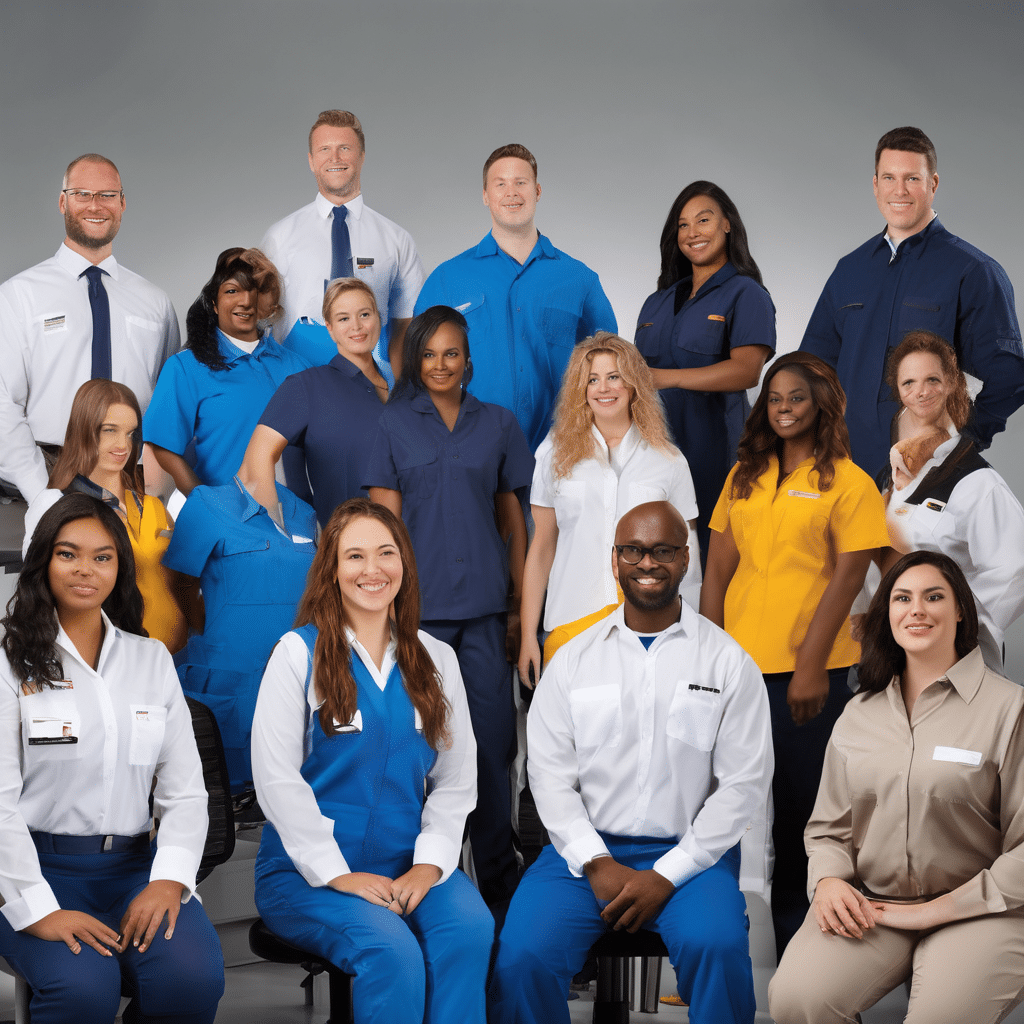
The process of scaling workwear for multiple employees involves more than just buying in bulk. It’s about ensuring consistency in quality, fit, and brand representation across a growing team.
Understanding Company Branding in Workwear
Verified workwear suppliers by state
Browse by city
·
Browse all states
Company branding is essential when it comes to employee uniforms. Your brand is not just a logo but the quality and style of the clothing your team wears.
You can also compare suppliers in Fresno and Miami. For deeper pages, review listings like 5 Points Men's Clothing and Acm & Sons Corp. Or use the cities index and states directory.
Imagine walking into an establishment where one employee is in casual attire while another sports a formal look. This inconsistency can leave customers confused and potentially damage the brand image.
Consistency is Key
Ensuring that every piece of clothing carries the same logo, color scheme, and fit is paramount.
Consistency in uniforms promotes a cohesive image and builds trust with customers.
- Choose colors that reflect your brand.
- Ensure logos are clear and consistently displayed.
- Consider the durability of materials for long-term use.
Choosing the Right Fabric and Fit
Useful directory pages to compare next
Compare suppliers in Bakersfield and San Antonio if you want more local options. You can also jump into listings such as 5 Points Men's Clothing and Acm & Sons Corp. For wider navigation, use the city index or the state directory.
Selecting the appropriate fabric can significantly affect both the comfort and functionality of workwear.
An engineering firm and a restaurant chain will have vastly different requirements, considering the nature of their work.
Factors to Consider When Selecting Fabric
When choosing a fabric, consider breathability, durability, and the specific needs of the work environment.
- Cotton is breathable and comfortable, suitable for desk jobs.
- Polyester blends provide strength and durability for more physical tasks.
- Water-resistant materials are ideal for outdoor jobs.
Each material offers distinct advantages, requiring careful consideration based on the job role.
The Importance of Fit
A well-fitted uniform not only ensures employee comfort but also enhances their confidence and efficiency in performing tasks.
Ill-fitting clothing can restrict movement or require constant adjustment, affecting productivity and motivation.
Always have sizing options available and consider professional fittings for larger teams.
Implementing a Cost-Effective Strategy
Scaling workwear can be a significant investment, but it doesn't have to break the bank. Strategizing can help manage costs efficiently.
Bulk Purchases and Partnerships
Consider forming partnerships with suppliers for bulk purchases to reduce costs.
Building a good relationship with a supplier can also ensure better quality control and potential discounts.
Don't forget to consider the potential costs of customization like embroidering logos or altering standard fits.
Forecasting Needs
Understand your company's growth trajectory to forecast future uniform needs accurately.
This foresight allows for better budget allocation and ensures uniform availability as the team expands.
An anecdote from a Seattle-based tech company illustrates this, where an unexpected ramp-up in hiring led to frantic last-minute uniform orders, causing delays and inconsistencies in appearance among team members.
Ensuring Sustainability and Ethical Considerations
Moreover, modern businesses increasingly focus on sustainability to reflect corporate responsibility, even in uniform choices.
Sustainability in Uniforms
Choose materials and suppliers committed to sustainable practices to ensure your uniforms reflect your company’s values.
Look for certifications or brands known for their ethical production processes.
Considering recycled materials can make a significant positive impact.
Ethical Labor Practices
Verify that your suppliers adhere to fair labor practices, ensuring that the workforce producing your uniforms is treated ethically.
Working with ethical suppliers supports social responsibility and enhances the company’s reputation.
Addressing Specific Employee Needs
Uniforms should reflect the diverse needs of your employees. Recognizing this can boost morale and show respect for individual preferences.
Custom Sizing and Adjustments
Providing options for custom sizing can significantly improve employee satisfaction.
Many employees have unique size requirements that standard uniforms may not meet.
By acknowledging and catering to these needs, you demonstrate a commitment to their well-being.
Inclusivity in Design
Ensure uniforms accommodate religious or personal preferences, like having options for hijabs or long sleeves when required.
Inclusivity also involves recognizing climatic differences and providing options suitable for different environments or allergies.
Implementing these considerations demonstrates your organization values and respects individual and cultural differences.
Implementation and Planning Processes
Finally, having a strategic planning process in place for roll-out is essential for smooth execution when scaling workwear.
Regular Feedback and Adjustments
After implementing scaled uniforms, regularly seek employee feedback to ensure ongoing satisfaction and comfort.
This feedback can help identify potential issues or necessary adjustments in the design or fabric choice.
Training and Introduction
Introduce new uniforms with proper training sessions to ensure all employees understand care instructions and expectations.
This practice helps in maintaining the uniform’s integrity and extending its lifespan.
Monitoring and Evaluation
Continuously monitor uniform performance and budget effectiveness to make informed future decisions.
Keeping track of wear and tear can provide insights into material longevity, influencing future purchase decisions.
In addition, periodic evaluations allow adjustments in quantities or styles as organizational needs evolve.
In summary, scaling workwear for multiple employees is a comprehensive endeavor that requires a careful balance of brand alignment, employee satisfaction, cost management, and sustainability. By focusing on these critical aspects, businesses can ensure a consistent, professional image while supporting a productive and satisfied workforce.
Find suppliers before placing your next large order
Use the directory to review local options and deeper listing pages.
Start with listings such as 5 Points Men's Clothing, Acm & Sons Corp and Alsco Uniforms.
Leave a Reply